What's your Palytt pal? The 16 food personality types, explained
Four letters for how you eat and one for how bold you like it. Meet the 16 food personality types, their four families and the character behind each one.

Palytt Team
Palytt’s 16 food personality types are playful descriptions of how you like to eat. Four letters describe discovery, company, planning and occasion; a Bold or Mellow suffix adds flavor preference. Take the free 20-question quiz in about four minutes, then read the traits alongside your result. You can lean one way or feel flexible between both. The quiz is for fun and does not predict dish enjoyment or power personal match scores.
Use your result to start a conversation about dinner: somewhere new or familiar, a group table or a quiet seat, a booked plan or a last-minute choice. It is not a psychological, health or nutrition assessment.
What do the four letters mean?
Each letter is one side of a simple question about how you eat.
- Discovery: Explorer (E) or Regular (R). Explorers chase dishes they've never tried. Regulars have go-to spots and go-to orders.
- Company: Gatherer (G) or Solo (S). Gatherers eat best around a shared table. Solo eaters savor a meal on their own terms.
- Planning: Planner (P) or Freestyler (F). Planners research, save and book ahead. Freestylers follow the craving in the moment.
- Occasion: Celebrator (C) or Daily (D). Celebrators turn meals into an occasion. Daily eaters love easy, everyday food.
Put together, the letters read like a short description. An EGPC is an Explorer who gathers people, plans ahead and makes the meal an event. An RSFD is a Regular who eats solo, follows the craving and keeps it everyday.
What does the fifth letter, Bold or Mellow, add?
The flavor letter sits after a hyphen, like EGPC-B or RSFD-M. Bold (B) means you want heat, funk, crunch and big flavor. Mellow (M) means you want balance, comfort and clean flavor.
It does not change your four-letter type or character. Use it to describe a preference when comparing dishes, rather than as a rule for what to order. A Bold Destination Diner might book the Sichuan spot and order the numbing dishes for the table, while a Mellow one books a new bistro and orders the perfectly done roast chicken for everyone. Ask what each person wants to eat before making the shared order. More in what Bold and Mellow mean.
What are the four Palytt pal families?
Your first two letters put you in a family. Our guide to the four Palytt pal families covers each one at the table.
- Scouts (EG): Explorer + Gatherer. Find the new spot, bring everyone. They're the friend who texts the group about a place that opened last week.
- Wanderers (ES): Explorer + Solo. Go find it, on their own terms. A counter seat, a side street or a stall with no sign.
- Hosts (RG): Regular + Gatherer. Trusted places, full tables. The food is familiar on purpose, so the night can be about the people.
- Keepers (RS): Regular + Solo. Keep their favorites close. A short list of places and a perfected order at each one.
What are the 16 food personality types?
Each code links to its own page with strengths, watch-outs and what to try ordering. For ideas by family, see what to order for your Palytt pal.
Scouts
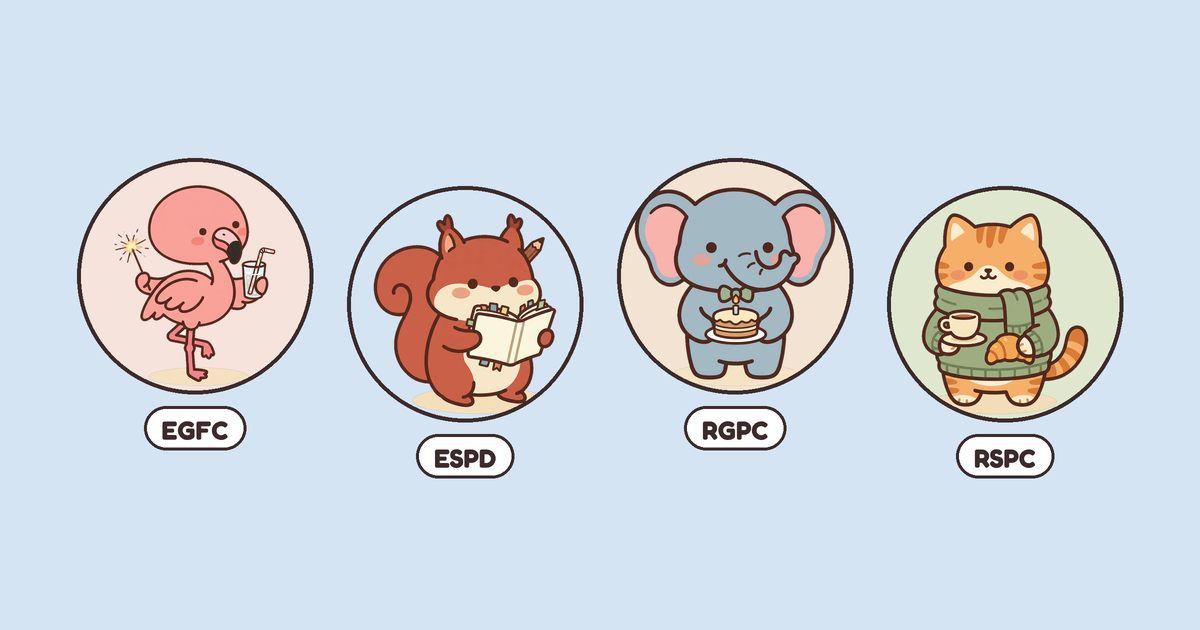
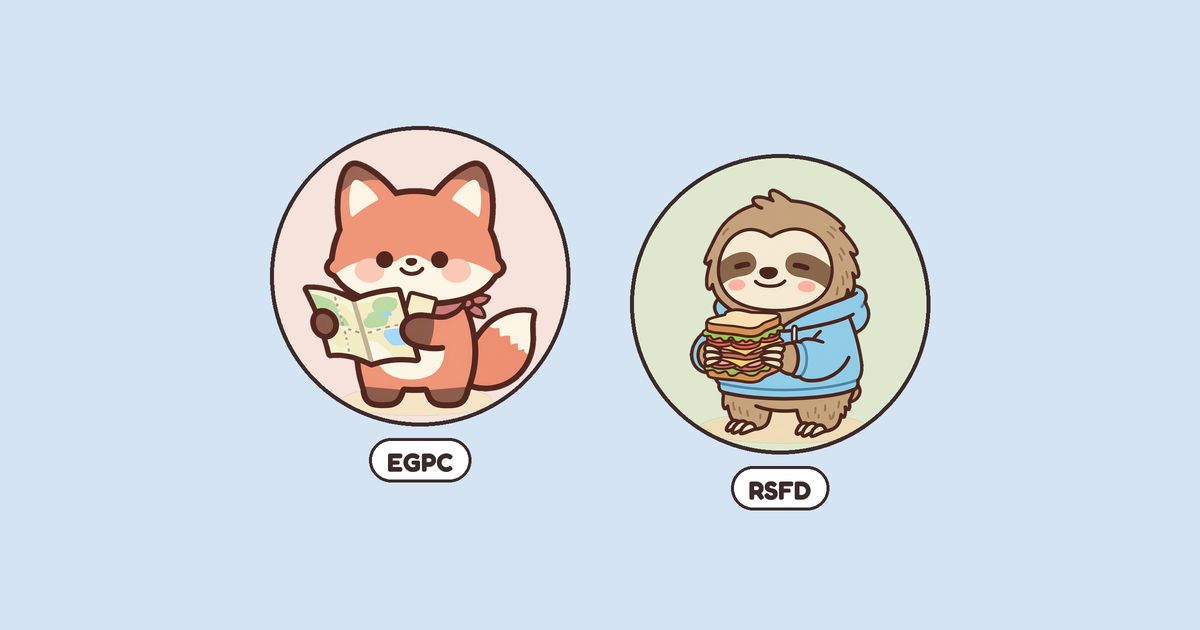
- EGPC, The Destination Diner: Saffron the fox, map already marked up. Finds the place, rallies the table.
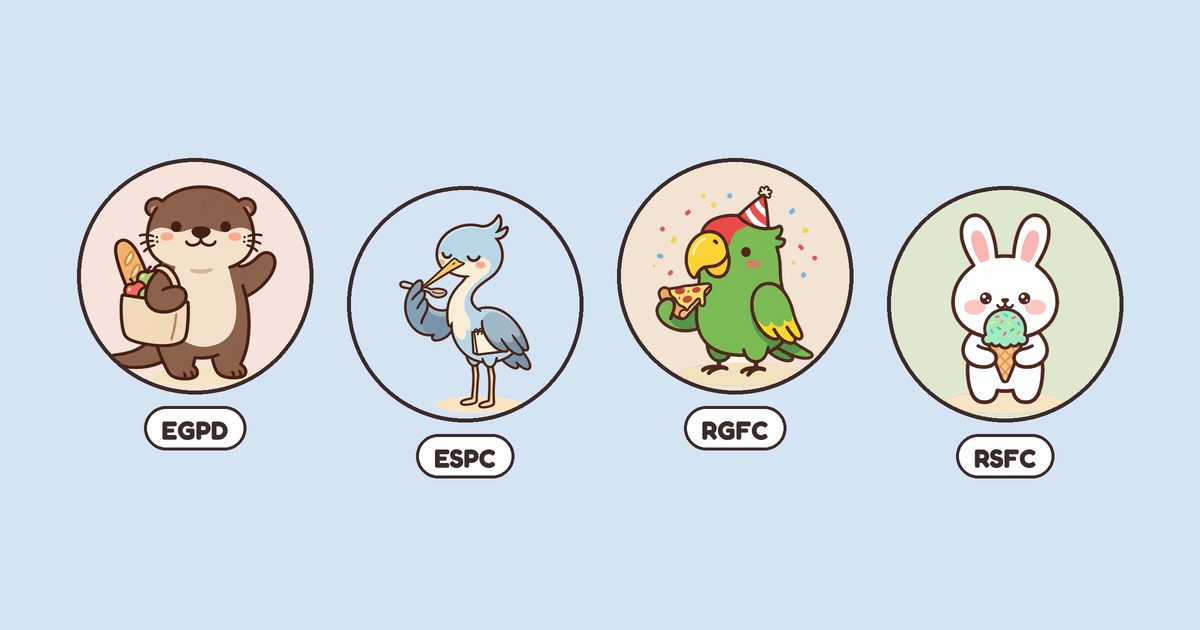
- EGPD, The Neighborhood Connector: Miso the otter, tote bag packed for whoever shows up. New spots, regular crew.
- EGFC, The Scene Seeker: Sorbet the flamingo, sparkler lit. Follows the buzz, brings friends.
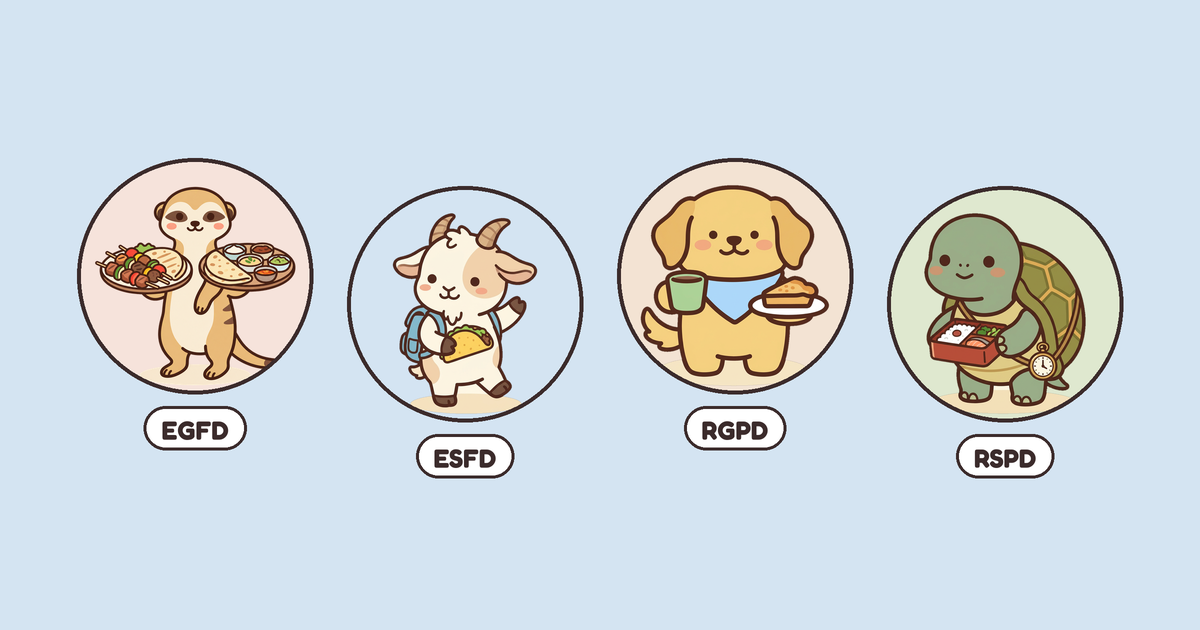
- EGFD, The Sharing Scout: Paprika the meerkat, a platter in each paw. Orders for the whole table.
Wanderers
- ESPC, The Thoughtful Epicure: Yuzu the heron, one careful spoonful at a time. Seeks it out, savors it slowly.
- ESPD, The Curious Curator: Hazel the squirrel, a saved list for every craving.
- ESFC, The Midnight Explorer: Nori the owl, lantern out after dark. Trusts a hunch late at night.
- ESFD, The Wandering Taster: Clove the goat, taco already found. Lets the next bite find them.
Hosts
- RGPC, The Thoughtful Host: Maple the elephant, cake with one candle. Knows the spot for every occasion.
- RGPD, The Table Regular: Biscuit the dog, coffee and pie. Same table, same people, same order.
- RGFC, The Celebration Chaser: Churro the parrot, party hat on. Any night can be a party.
- RGFD, The Comfort Crew: Mochi the capybara, sharing a big bowl of noodles. Favorite food, favorite people.
Keepers
- RSPC, The Cozy Connoisseur: Earl the cat, teacup and croissant. Knows exactly what makes it special.
- RSPD, The Ritualist: Bento the tortoise, lunch packed the same way every day. Trusted spots, perfected orders.
- RSFC, The Simple Pleasure Seeker: Sprinkle the bunny, one perfect scoop. A small treat is an occasion.
- RSFD, The Easy Regular: Toast the sloth, favorite sandwich, zero rush. Knows what hits the spot.
Every type also has an opposite, with all four letters flipped. Saffron's opposite is Toast: EGPC books the tasting menu for four, while RSFD is happy with a corner deli sandwich on the couch. Neither is better. They just want different nights; see dinner partners by Palytt pal.
How do you find your Palytt pal?
Take the free food personality quiz. Twelve questions cover the four letters, three cover flavor, and five add dining details. For the first fifteen, choose a definite preference, a usual preference or Both / depends. You do not need to force a choice when either answer fits. You can take it without an account, and your result is saved in that browser. On the result screen, you can sign in to save it to your Palytt profile; use that same account in the app.
Your result labels traits as Strong, Leans or Flexible between both. Those labels describe your answers, not the quiz’s accuracy. If you are flexible, treat the character as a starting point and read a neighboring type. Your answers matter more than fitting every sentence of a character description.
How should you use a mixed or flexible result?
Read the traits separately. You might enjoy discovering a new café on your own but return to a familiar restaurant for a birthday with friends. A flexible Company result leaves room for both; it does not mean you answered incorrectly.
For your next meal, name the preference that matters today: “somewhere new, quiet enough to talk, and no booking needed.” Compare that with the people joining you. Keep budget, travel time and dietary requirements explicit, since a four-letter code does not contain those details.
Is your Palytt pal the same as your palate?
No. Your Palytt pal is how you eat. Your palate is what you love: the dishes and flavors you keep coming back to, like tonkotsu ramen, pad thai or butter chicken. Two Thoughtful Epicures can share a type and disagree about every dish on a menu.
A Palytt pal can suggest the kind of place and order you might enjoy, but it can't tell you whether you'll like the pad see ew at one particular Thai spot. A personal match score uses taste and dish evidence when enough exists; it is not a measured probability that you will enjoy that plate. Read how taste matching works to understand the separate signals.
How can Palytt help?
The Palytt pal quiz on palytt.com is free and works without the app. The Palytt app, free on iPhone and iPad, adds a taste profile that learns from what you save, post and rate, then can show a 0–100 match score with a one-line note from Pal when there is enough taste and dish evidence. Where enough dish information exists, an order guide groups picks into get this, add on, popular here and maybe skip. Your Palytt pal shows on your profile as a sticker. Palytt doesn't turn your four letters into a diet plan or a verdict on who you are, it isn't on Android yet, and its restaurant and dish coverage varies.
Ready to put your preferences to use? Get Palytt for iPhone or iPad and start with a dish you know: record whether you would order it again. Your dish verdicts add taste evidence. Your four-letter quiz result stays separate from match scoring.
FAQ
Can I keep my web quiz result in the app?
On the quiz result screen, sign in and save the result to your Palytt profile. Use the same account in the app to access that saved profile. The four-letter result describes how you eat; dish verdicts add evidence about what you enjoy.
How many food personality types are there?
There are 16 Palytt pals, made from four either-or letters. A fifth flavor letter, Bold or Mellow, is added after a hyphen, but it doesn't create new types; an EGPC-B and an EGPC-M are both Destination Diners.
What is the rarest Palytt pal?
Palytt doesn't publish how many people get each type, so there's no official rarest one. Every type is equally valid, and your result can shift as your eating habits change.
Can my Palytt pal change?
Yes. It reflects how you answer today, and a move to a new city or a new group of friends can change how you eat. Retake the quiz whenever it stops feeling right.
Is the Palytt pal quiz a personality test?
No. It's a food-preference quiz about how you like to eat, and it doesn't measure personality, health or diet.
Tags
Related articles
What kind of eater are you? The four Palytt pal families
Scouts, Wanderers, Hosts or Keepers? Two questions about how you eat put you in a family. Here's what each is like at the table and how to plan a meal for them.
What to order for your Palytt pal, family by family
Suggestions for what to order and where, for all 16 Palytt pals, from tasting menus to the corner deli, plus why a per-dish match score is the sharper answer.
Who should you eat with? Dinner partners by Palytt pal
Count the letters you share. Table-mates, balancing types and opposites, how Bold and Mellow fit in, and how to pick a restaurant when your Palytt pals differ.
Know what to order, everywhere
Palytt is free to download on the App Store for iPhone and iPad. Android app coming soon.
Download on the App Store
At the table
Questions, ordering tips and experiences. Comments are public and separate from dish ratings.
Sign in to comment. Your display name and comment will be public.